Plywood vs Particle Board for Custom Wardrobes and Kitchen Cabinets
A specifier-focused comparison of plywood and particle board for made-to-measure cabinetry, including what to confirm in writing before production.
- REMUCH offers two board options for cabinetry: plywood (multi-layer) and particle board.
- The right choice depends on humidity exposure, span and load, finish system, fixing details and budget — not on a universal "better" label.
- Thickness, layers, grade, facing, glue type and edge treatment are confirmed per project in writing.
- Environmental grades are never published without the corresponding test report.
The two board options, defined
Plywood (multi-layer) is a panel built from cross-laminated veneer layers bonded together; particle board is an engineered panel made from wood particles bonded with resin under heat and pressure. Both are used for made-to-measure cabinetry, and REMUCH offers both for custom wardrobes, kitchen cabinets, interior doors and wood-based wall panels. Neither is a default: the board is chosen per project and recorded in the written specification.
This matters because a material claim is only useful when the rest of the specification is defined. A board name alone does not tell you thickness, layer count, grade, facing, glue type or edge treatment. Those are the fields that determine how a cabinet performs and how it looks after installation.
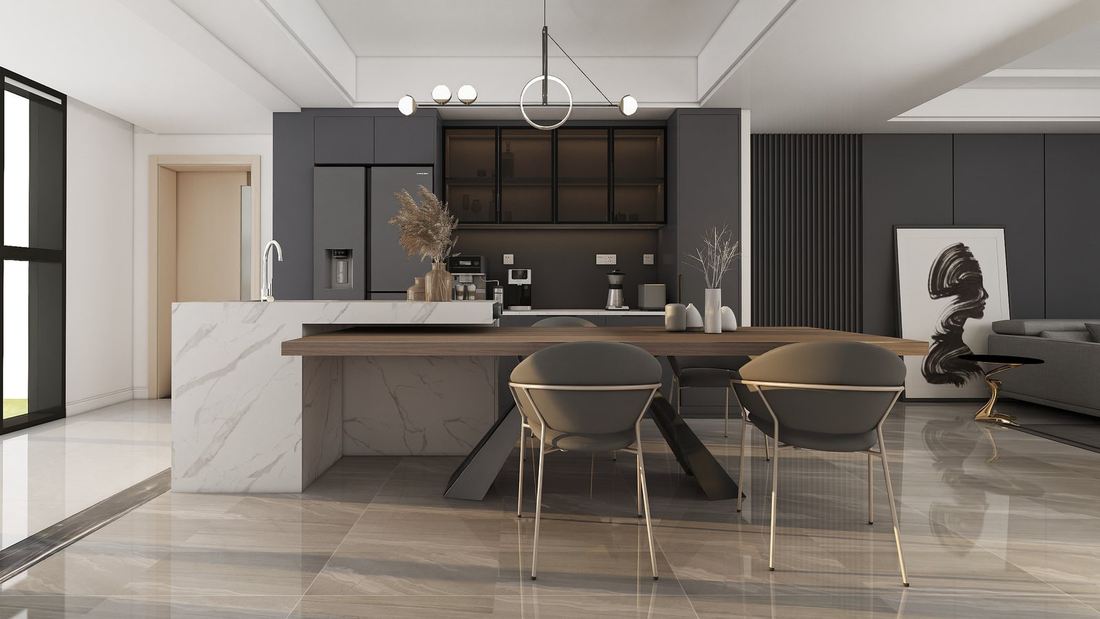
Side-by-side comparison
The table below gives qualitative, generally accepted engineering characteristics. It is buying guidance, not a test certificate — project-specific values are confirmed in writing against the actual board supplied.
| Consideration | Plywood (multi-layer) | Particle board |
|---|---|---|
| Structure | Cross-laminated veneer layers | Uniform engineered wood-particle core |
| Behaviour around moisture | Generally more tolerant of intermittent humidity when edges are well sealed | More sensitive to prolonged moisture exposure, especially at unsealed edges |
| Screw holding and fixings | Typically strong holding in layered construction | Consistent holding when the correct fixings and insertion points are used |
| Weight | Usually heavier for the same thickness | Usually lighter, which can ease handling |
| Surface and finish | Veneer and face quality vary by grade; confirm the facing | Very uniform surface, well suited to consistent laminated or melamine finishes |
| Long spans | Often selected where stiffness over a long shelf span is a priority | Keep spans and loading within the design; confirm with the drawing |
| Budget position | Typically a higher material cost | Typically a lower material cost |
Choosing a board for wardrobes
For built-in wardrobes, walk-in closets, sliding-door systems, tatami room storage and children's room wardrobes, start with the shelf spans and the room environment. Long shelves carrying a heavy load, or rooms with variable humidity, tend to push the decision toward multi-layer plywood. Where the priority is a uniform, repeatable finish across many matching doors and panels, particle board is often the practical choice.
Also consider what the wardrobe has to coordinate with. REMUCH can match finishes across wardrobes, kitchen cabinets, interior doors and wall panels in the same order, so the board decision is usually made once for the whole joinery package rather than item by item.
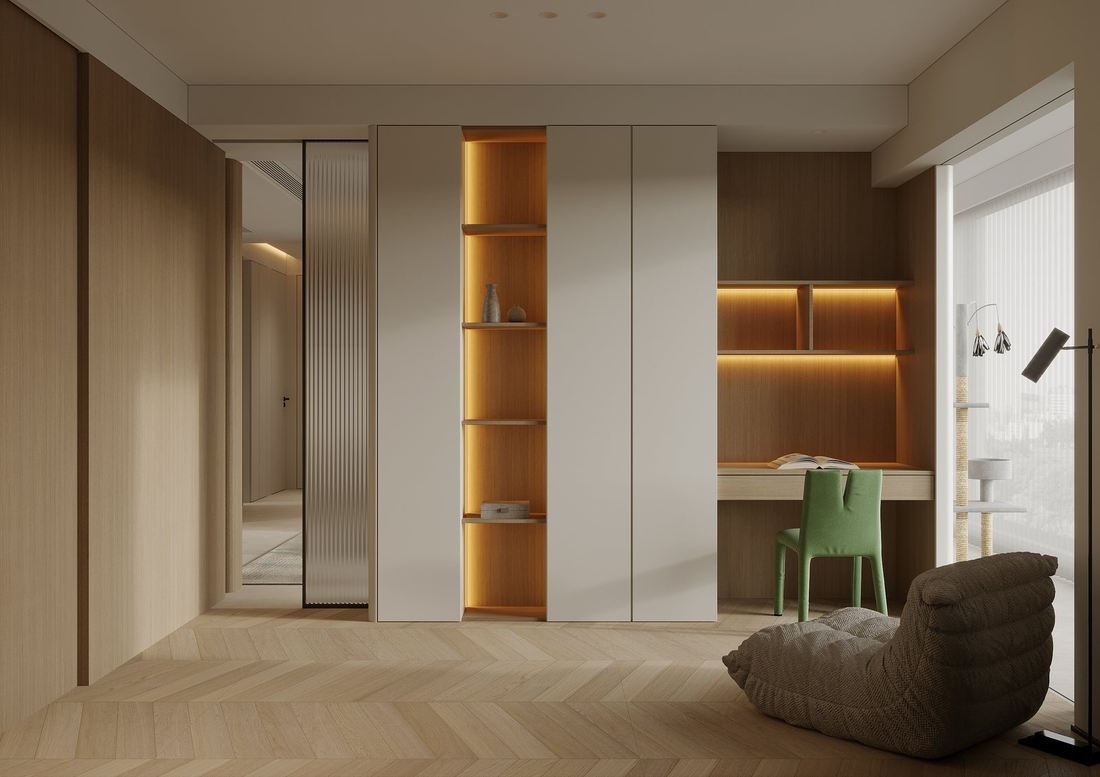
Choosing a board for kitchen cabinets
Kitchens add water, heat and frequent cleaning to the equation. Base cabinets near sinks and dishwashers, and any panel with exposed edges, deserve particular attention to edge sealing and the finish system. Where appliance schedules or worktop plans affect the cabinet layout, send them with the drawing — cabinet scope, worktops, sinks and appliances can be quoted separately.
Again, no single board is automatically correct. A well-specified panel with properly sealed edges and appropriate fixings will generally outperform a poorly specified "premium" panel.
What we confirm in writing before production
- Board type: plywood (multi-layer) or particle board
- Thickness, layer count or density grade, and facing
- Glue type and any environmental grade required by the destination market
- Edge banding and surface finish
- Hardware brands and models, where specified
- Door or front type and the finish matched across categories
How to brief the choice
Send the room type, the shelf spans or loading expectations, the humidity conditions, the finish you want, and the destination market. If you are unsure, say so — we will advise once we know the project, and the final board will be recorded in the written specification rather than left as an assumption.
Frequently asked questions
Which board does REMUCH offer?
Plywood (multi-layer) and particle board. Both are available for cabinetry, and the choice is confirmed per project in writing.
Is plywood always better than particle board?
No. It depends on humidity, span and load, finish system, fixing details and budget. A fully specified panel with sealed edges matters more than the label alone.
Can you supply environmental grade certificates?
Environmental grades and test reports are confirmed against the requirements of your destination market when we quote. We do not publish a grade without the corresponding report.
Can the same finish be used across wardrobes, doors and wall panels?
Yes. Matching finishes across cabinetry, interior doors and wall panels in the same order is one reason buyers consolidate a whole-home package.
Is there a minimum order for a specific board choice?
No. There is no MOQ on our cabinetry lines, including for single-room and sample orders.